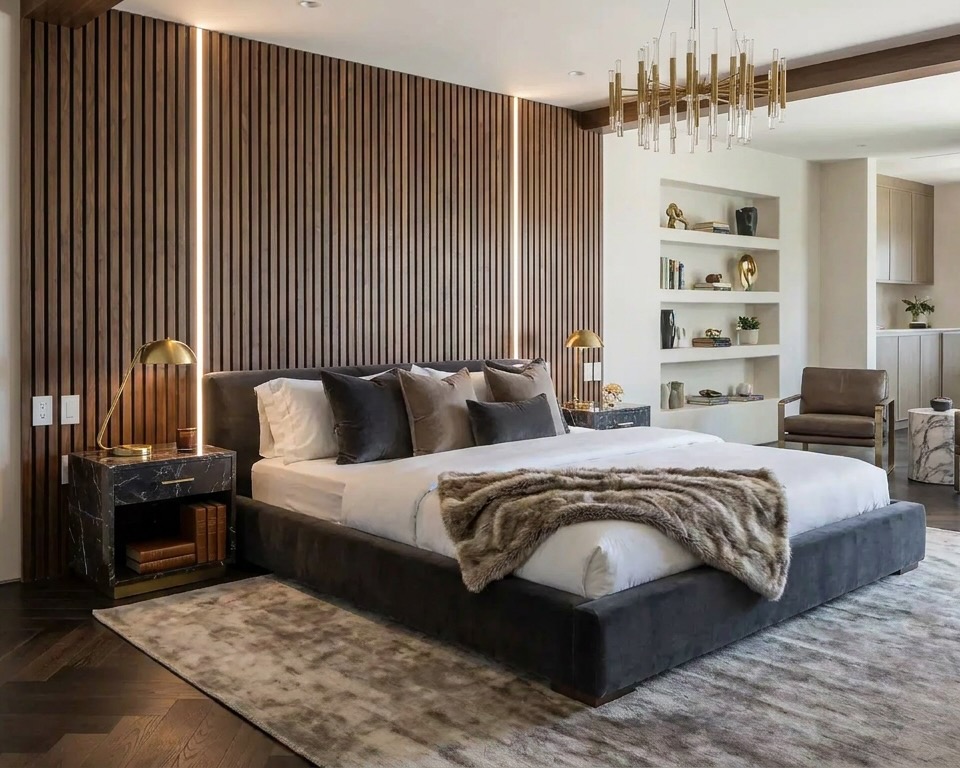
Interior design styles are coherent visual languages — combinations of color palette, material, form, proportion, and arrangement — that give a room a recognizable identity. Each style carries its own logic about how a home should feel: calm or vibrant, ornate or restrained, traditional or contemporary. The right style for your home depends on three factors: how you actually live, the architecture you're working with, and the mood you want to come home to. AI tools like Decorb let you see any style rendered in your actual room before committing — so you can choose with information rather than imagination.
This guide walks through the 12 major interior design styles defining home design in 2026, with the defining traits, signature materials, and prompt tips you'd need to test each one in your own space.
How to Find Your Interior Design Style
Before reading style descriptions, ask yourself three questions. The honest answers will narrow the field faster than any quiz.
- What does your favorite room you've ever been in look like? Not aspirational — actual. A hotel lobby that made you stop. A friend's living room you didn't want to leave. The texture, the light, the color you remember. That memory points at your real preferences more reliably than Pinterest does.
- How do you actually use your home? A maximalist room is glorious to look at and exhausting to maintain. A monastic minimalist space photographs beautifully but punishes households with kids, pets, and hobbies. Match style to lifestyle.
- What's the bone structure of your home? A Victorian terrace fights modern industrial. A new-build apartment resists rustic farmhouse. The best designs amplify the architecture you already have rather than contradicting it.
The 12 Major Interior Design Styles
1. Japandi
Japandi fuses Japanese wabi-sabi (the beauty of imperfection and natural patina) with Scandinavian hygge (warmth, comfort, light). The result is warm minimalism: spare but never cold, functional but never clinical. Palettes lean into warm whites, oat, greige, muted terracotta, sage, and warm oak. Furniture sits low, materials are honest (raw wood, linen, ceramic, paper, stone), and negative space is treated as a design element rather than absence.
Best for: people who want calm without austerity. Prompt tip: "Japandi style, warm oak floors, oat linen sofa, ceramic vase with single olive branch, soft diffused daylight." Read our deep dive into Japandi for full guidance.
2. Minimalist Nordic
The original Scandi minimalism: light, airy, functional, and humane. White walls dominate but never read sterile because they're balanced by pale woods, wool throws, and soft natural light. Function leads form; every piece is well-made and earns its place.
Best for: small spaces, north-facing rooms, anyone craving visual quiet. Prompt tip: "Scandinavian minimalist, white walls, pale oak floor, wool throw, paper pendant light, sheepskin chair."
3. Mid-Century Modern
The aesthetic of 1950s–60s American design at its most confident: walnut, teak, brass, leather, and clean low-slung silhouettes. Pieces have personality but never shout. Color appears in small doses — burnt orange, mustard, teal — anchored by warm wood and neutral textiles.
Best for: open-plan living rooms, vintage architecture, anyone who loves furniture as sculpture. Prompt tip: "Mid-century modern living room, walnut credenza, leather lounge chair, brass arc lamp, mustard rug."
4. Bohemian / Maximalist
The opposite of minimalism: layered textiles, pattern on pattern, abundant plants, vintage finds, global textiles, and confident color. Bohemian leans warmer and more relaxed; maximalist leans bolder and more curated, but both share an "more is more" philosophy.
Best for: collectors, plant people, anyone whose home should feel like a story rather than a showroom. Prompt tip: "Bohemian living room, layered Persian rugs, rattan chairs, hanging plants, terracotta and ochre tones, vintage brass."
5. Contemporary Luxury
Polished, considered, and quietly expensive. Think honed marble, brushed brass, deep velvets, statement lighting, and a tightly controlled palette of charcoal, cream, and one accent. Surfaces matter — every material reads premium.
Best for: open-concept urban apartments, hosting-forward homes. Prompt tip: "Contemporary luxury living room, honed marble coffee table, charcoal velvet sectional, brushed brass sconces, walnut wall paneling."
6. Art Deco
1920s opulence: bold geometry, lacquered surfaces, brass and gold, jewel tones (emerald, sapphire, ruby), and a willingness to be theatrical. Art Deco rewards confidence and high ceilings.
Best for: pre-war apartments, period homes, anyone who finds beige depressing. Prompt tip: "Art Deco living room, emerald velvet sofa, geometric brass-and-marble coffee table, fluted wall paneling, sunburst mirror."
7. Rustic Farmhouse
Warm, lived-in, and rooted in vernacular craftsmanship. Reclaimed wood, linen, vintage hardware, exposed beams, soft whites, and warm metals. Modern farmhouse cleans up the look; traditional farmhouse leans into the patina.
Best for: country homes, kitchens, family-forward spaces. Prompt tip: "Modern farmhouse kitchen, white shaker cabinets, butcher block island, black iron pendants, reclaimed oak beams."
8. Modern Industrial
The aesthetic of converted warehouses and loft conversions: exposed brick, blackened steel, concrete, raw wood, and Edison-bulb lighting. Softened with leather and rugs, industrial reads masculine and grounded.
Best for: lofts, urban apartments, high ceilings. Prompt tip: "Modern industrial loft, exposed brick wall, blackened steel shelving, leather Chesterfield, concrete floor, Edison pendants."
9. Coastal / Hamptons
Light, airy, ocean-adjacent. Whites and soft blues, pale woods, linen and rope textures, woven baskets, and an emphasis on natural light. Coastal can be casual (beach cottage) or refined (Hamptons).
Best for: vacation homes, sun-drenched rooms, restful bedrooms. Prompt tip: "Hamptons coastal living room, white linen slipcovered sofa, navy and white striped rug, rattan accents, driftwood coffee table."
10. Wabi-Sabi
Japanese in origin, Wabi-Sabi celebrates imperfection, asymmetry, and the beauty of weathered things. Earthen plaster walls, handmade ceramics, raw wood, and natural patina. Closely related to Japandi but more rustic and contemplative.
Best for: small meditative spaces, studies, bedrooms. Prompt tip: "Wabi-sabi bedroom, lime-washed walls, raw wood platform bed, handmade ceramic lamp, undyed linen bedding."
11. Biophilic
Plant-forward and daylight-driven, biophilic design pulls nature inside. Generous greenery, organic materials, natural light, and palettes drawn from forests and stone. It overlaps with Japandi, Scandi, and contemporary depending on execution.
Best for: homes with strong natural light, people who love plants. Prompt tip: "Biophilic living room, fiddle-leaf fig and monstera, rattan armchair, terracotta planters, warm sand walls, abundant daylight."
12. Transitional
The middle path between traditional and contemporary. Classic silhouettes in updated materials, restrained color, and a sense of timelessness. Transitional rooms age well because they aren't married to a trend.
Best for: family homes, resale-conscious renovations, people who want longevity. Prompt tip: "Transitional living room, neutral linen sofa, classic wingback chair in muted teal, restoration-style brass lamp, oak parquet floor."
How to Use AI to Explore Interior Design Styles
The fastest way to find your style isn't to study them in the abstract — it's to see them in your actual room. Here's a productive workflow:
- Take one good photo of your room. Corner of the room, landscape orientation, hip height, natural light. Use it as your control image.
- Generate the three styles you find most appealing. One generation each. Compare them side by side rather than separately — context changes perception.
- Generate one style you're skeptical of. You'll either confirm your skepticism or be pleasantly surprised. Both outcomes are useful.
- Iterate on the winner. Push deeper into the style you respond to most — try a warmer variant, a moodier variant, a more saturated variant. Find your specific corner of the style, not just the category.
For more guidance, see the complete AI interior design guide and read our collection of prompts for each style.
Style Mixing: When to Break the Rules
The best-designed homes rarely live inside a single style perfectly. They borrow. A Japandi base with one bold Art Deco lamp. A minimalist kitchen with rustic farmhouse hardware. A contemporary luxury living room with a single bohemian rug.
The rule for mixing is straightforward: pick one dominant style (70%), one supporting style (20%), and one accent (10%). When all three share something — a palette, a material, a mood — the room reads layered. When they share nothing, it reads chaotic. AI tools make it cheap to test combinations before committing.
Choose with Information, Not Imagination
Style names are useful shorthand. But your actual room — your light, your floor, your bones — will respond differently to each style than the magazine photo suggests. The fastest way to commit confidently is to see it. Five minutes with Decorb beats five weeks of Pinterest indecision.