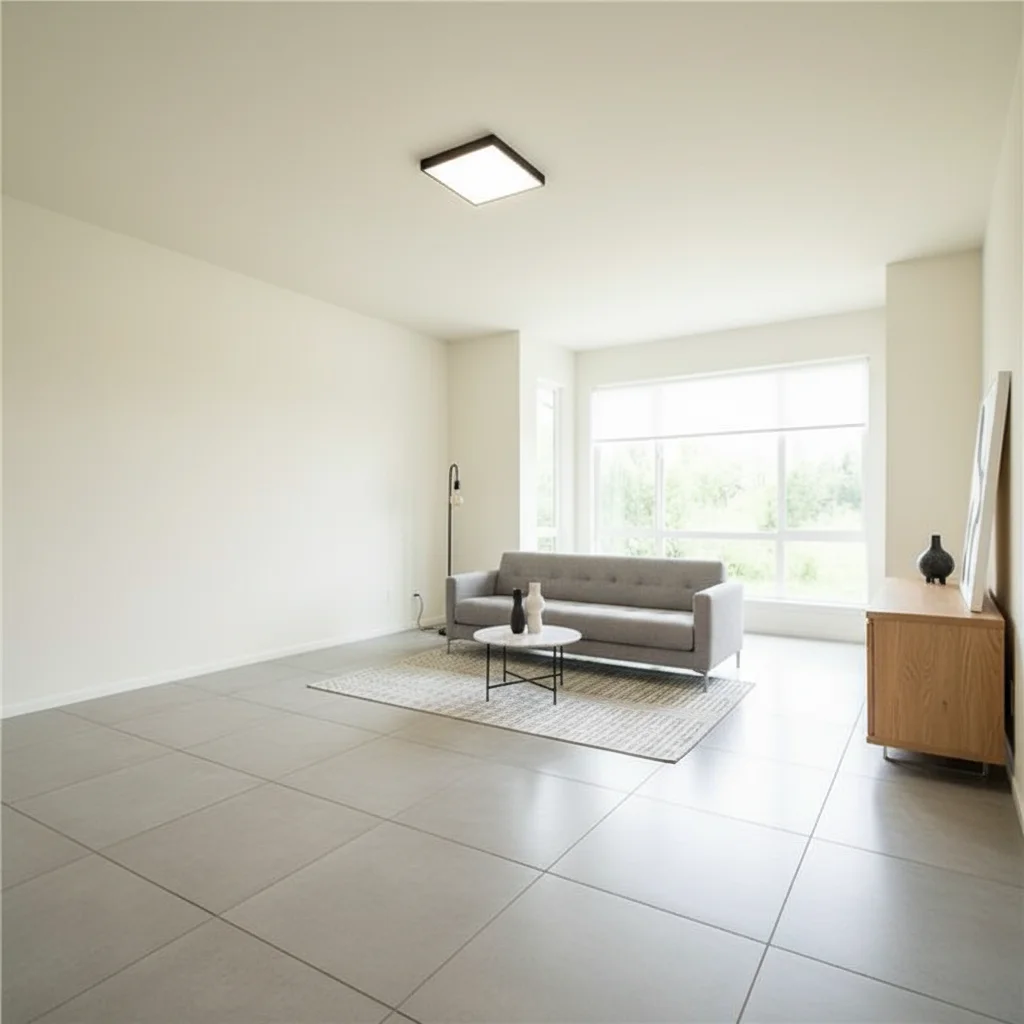
The living room is the hardest room in the house to redesign, and it is the one homeowners most often get wrong. It has more competing demands than any other space — somewhere to watch a film, somewhere to host a dinner crowd that won't fit at the table, somewhere to read on a quiet Sunday, somewhere children can spread out, somewhere that photographs well when guests arrive. It has more individual furniture pieces than any other room, the largest single piece of furniture in the house (the sofa), the highest cost of error, and the highest social visibility. Every wrong choice is on display.
This is exactly why AI rendering changed how serious living room redesigns get done. The cost of a wrong sofa is somewhere between two thousand and ten thousand dollars and a month of disruption. The cost of generating ten AI renders of your actual living room in ten different directions is essentially nothing. Doing the second before the first eliminates the most expensive mistakes in interior design.
Why Living Rooms Are the Hardest Room to Redesign
Four reasons the living room is harder than the rest of your home:
First, the sofa decision dominates everything else. The sofa anchors the room, the rug is sized to the sofa, the coffee table is proportioned to the sofa, the side tables relate to the sofa's arm height. Get the sofa wrong and every subsequent decision is fighting against it. Get it right and most of the room falls into place.
Second, flow and function compete. The living room has to support both stillness (one person reading) and motion (six people moving through it). The arrangement that looks best in photos often performs worst in real life. AI rendering lets you test the photo version and the lived-in version separately.
Third, scale is brutal. The living room is large enough that small mistakes are not small. A rug that is six inches too small reads as a clear error from across the room. A sofa that is one shade off from the wall reads as a missed match every time you walk in. The room punishes imprecision.
Fourth, the social stakes are high. The living room is the room you show people. Mistakes in the bedroom are private. Mistakes in the living room are commented on, however politely, by every visitor.
What AI Living Room Visualization Actually Shows You
The honest value of AI rendering for living rooms is concentrated in four specific answers that no other tool reliably gives:
- Sofa placement and scale. Sectional or two-seater pair. Against the long wall or floating in the middle of the room. The render shows you how the sofa actually fills your specific room rather than how it looks in the showroom photo.
- Rug sizing — the most common mistake. Most homeowners buy rugs at least one size too small. AI renders make the rug-size error painfully visible before you spend on the wrong rug.
- Lighting depth. One overhead pendant versus three layered low sources will produce two entirely different rooms. The render lets you see the second version before you wire it.
- Palette balance. How a sage-green wall reads against a warm oak floor and an oat linen sofa. The interaction effect is what AI shows you that mood boards never can.
The Living Room Design Principles AI Helps You Test
Three principles that determine whether a living room feels right, and that benefit most from AI testing:
1. The focal point. Every living room needs one focal point — the place the eye lands when you enter. Most commonly a fireplace, occasionally a large window, sometimes a piece of art or a television mounted thoughtfully. The arrangement of seating should reinforce the focal point, not compete with it. AI renders make the focal point clear or absent immediately.
2. Flow. A living room with good flow lets people enter, sit, leave, and pass through without anyone having to step around furniture. The standard rule is at least 36 inches of walkway through the major paths. Renders show you whether your layout breathes or chokes.
3. Scale relationships. Coffee table at roughly two-thirds the length of the sofa. Rug extending at least 8 inches beyond the sofa on each side, ideally with the front legs of all seating sitting on it. Side tables at sofa-arm height. Pendant or chandelier roughly one-third the table or rug diameter. Renders surface scale errors before you order.
"The most expensive mistakes in interior design happen in the living room. The cheapest insurance against them is ninety minutes of looking at your actual room rendered four different ways."
How to Capture Your Living Room for Best AI Results
The render quality depends heavily on the input photo. The reliable rules:
- Stand in the corner that gives you the widest unbroken view. Most living rooms have one clear corner that captures the sofa wall, one side wall, and a third surface (floor, ceiling, window). Use it.
- Hip height, landscape orientation. Around four feet off the ground. Landscape format works better for living rooms than portrait — most living rooms are wider than tall.
- Daylight, no flash, no overhead light. Mid-morning is usually best. Turn off ceiling lights. Open the curtains fully.
- Tidy before shooting. Clear the coffee table to one or two objects. Put away laundry baskets, kids' toys, magazines. The model interprets visible clutter as design intent.
- One control photo. Use the same photo as your base for every render. Generate variations through prompts, not new photos.
Living Room Styles to Try With AI
A short list of styles that produce particularly clear AI renders on living rooms specifically:
Mid-century modern. Walnut credenza, leather lounge chair, oat boucle sofa, brass arc lamp, low geometric coffee table, mustard or burnt orange accent. Mid-century renders cleanly because the silhouettes are distinctive and the palette is restrained. A reliable starting point for living rooms with character architecture.
Contemporary luxury. Honed marble coffee table, charcoal velvet sectional, brushed brass sconces, walnut wall panelling, deep linen drapery. Cinematic and material-rich. AI is especially useful here because the materials are expensive enough that buying without seeing first is reckless.
Bohemian. Layered Persian rugs, rattan chairs, hanging plants, terracotta and ochre tones, vintage brass. Bohemian living rooms have so many variables that AI rendering is essentially the only way to test the layered effect before you commit.
Warm minimalist. Bone-white walls, pale oak floor, oat linen sofa, one sculptural coffee table, single floor lamp, one piece of art. The living room version of the warm minimalist style — quiet, considered, and surprisingly hard to get right without seeing.
From Photo to Confident Purchase: The Step-by-Step
The complete workflow for an AI-driven living room redesign:
- Photograph the room. Widest unbroken corner, hip height, landscape, natural daylight, surfaces tidied.
- Upload to Decorb. One photo, used as your control image throughout.
- Generate three to four style variants. Try the styles you are seriously considering. "Mid-century modern living room, walnut credenza, oat boucle sofa, leather lounge chair, brass arc lamp, low marble coffee table, sage wall, soft afternoon daylight." Repeat per style.
- Compare side by side, on one screen. Distance comparison is the most reliable decision tool. Pinterest in three tabs is a worse version of the same exercise.
- Test layout alternatives. For the winning style, generate two layout variations — sofa against the long wall vs floating; sectional vs sofa-plus-armchair pair. Layout decisions are often the highest-stakes ones in a living room.
- Iterate the palette. Within the winning style, test a warmer, a cooler, and a moodier variant. Find the specific palette point that suits your light.
- Build the shopping list. From the final render, list each major piece — sofa, rug, coffee table, side table, lounge chair, floor lamp, wall color, art piece. Match each to specific retailer products.
- Order in the right sequence. Sofa and rug first (longest lead times, most disruptive to swap). Lighting and accessories last. Paint after the major pieces are in.
The full pre-purchase exercise takes a single sitting. The redesigns it prevents from going wrong save weeks and thousands of dollars.
Choose with Information, Not Imagination
The living room is too expensive and too visible to redesign on instinct. The cheapest insurance is seeing it first. For the broader framework, read the full AI interior design guide, and for the case against guessing your way through it, see Stop Guessing What Your Room Will Look Like.