I built an AI design tool, so you might expect this article to argue that designers are obsolete. It doesn't — because they aren't, and pretending otherwise would be dishonest. AI has genuinely won the visualization battle: it's faster, cheaper, and works directly on your actual room. But there's a whole category of design work where a professional does things AI simply cannot, and the gap isn't going to close with a better model, because it isn't about intelligence. It's about having hands, a phone, a Rolodex, and legal standing. Here are the five things designers do that AI can't touch, with the specific moments where each one saves you.
1. Tactile Material Knowledge
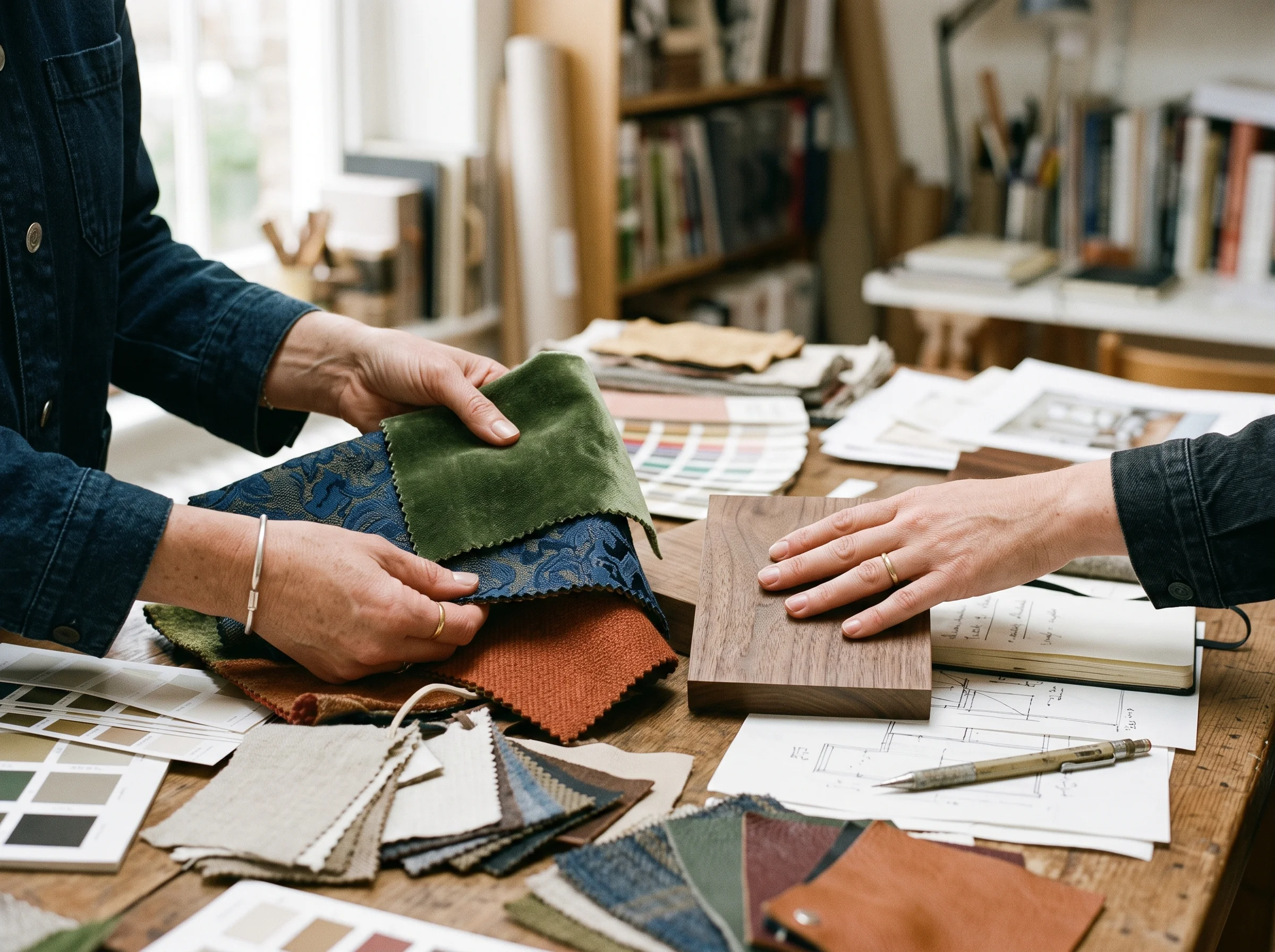
A designer can pick up a fabric swatch and know things a photograph will never carry. They can feel whether an upholstery weave will pill within six months, whether a wood will dent under chair legs or hold up, whether a "matte" paint will actually read matte in your north-facing light or turn faintly chalky. They test finishes in the room's real light, at different times of day, before anyone commits.
AI cannot touch anything. It renders how a velvet looks, beautifully — but it has no idea whether that velvet will crush flat where you sit every night, or whether the "durable" performance fabric will actually survive a toddler. The moment this matters: you fall in love with a pale linen sofa in a render, buy it, and discover it stains if you look at it wrong. A designer with the swatch in hand would have steered you to a look-alike that survives real life.
2. Structural Expertise
Designers read what's behind your walls. They know that the wall you want to open might be load-bearing, that the kitchen island you're picturing needs a plumbing and electrical run that changes the budget, that the recessed lighting layout has to dodge the joists. They coordinate with engineers and pull the threads that keep a renovation standing up.
AI cannot see inside your walls. It will happily render your living room with that partition removed and the space opened up — and it has no way of knowing that partition is holding up the second floor. The moment this matters: any project where a render tempts you to move a wall. That's not a prompt; that's a structural question, and getting it wrong is dangerous and expensive. AI shows the dream; only a professional tells you whether it's buildable.
"The gap isn't going to close with a better model, because it isn't about intelligence. It's about having hands, a phone, a Rolodex, and legal standing."
3. Contractor Management
On any real renovation, a designer functions as a project manager. They sequence the trades so the electrician comes before the drywaller, hold contractors accountable to a schedule, catch the tile that was set wrong before it's grouted, mediate the inevitable disputes, and absorb the operational chaos of a months-long build so you don't have to.
AI cannot make a phone call, cannot show up on site, cannot notice that the delivered cabinets are the wrong finish. The moment this matters: a five-trade renovation with a permit, where the difference between on-time and a three-month disaster is entirely about who's coordinating the humans. That's a human's job, and a good one earns their fee here alone.
4. Trade Relationships
Designers have a Rolodex you don't. Access to products that aren't sold to consumers, manufacturer relationships that get samples and priority, negotiated to-the-trade pricing, and the workroom that can reupholster or fabricate something custom. Years of relationships turn into options and prices that simply aren't available to a homeowner shopping retail.
AI has no Rolodex. It can show you a gorgeous custom built-in, but it can't call the millworker who'll build it or get you the trade line that isn't on any website. The moment this matters: when you want something specific and beautiful that you can't find anywhere, and you need someone who knows exactly who makes it and can get it made.
5. Legal and Code Knowledge
Designers navigate building permits, ADA compliance where it applies, egress requirements, and the local code rules that govern what you're allowed to build. They keep your project legal and inspectable, which protects your resale value and your safety.
AI has no legal standing and no knowledge of your municipality's code. It won't tell you that your basement bedroom needs an egress window by law, or that your railing height is below code. The moment this matters: any permitted work, where a code miss means a failed inspection, a forced rebuild, or a problem that surfaces years later when you try to sell.
The Honest Counter: Where AI Wins Every Time
Now the other side of the ledger, because it's just as true. For visualization, iteration, and style decisions, AI beats designers every single time — not on taste, but on speed and cost. The designer's own visualization is outsourced to a rendering studio at $1,500 a room and a two-to-three-week wait per revision. AI does the same loop in thirty seconds for pennies, on your actual room, as many times as you like. When the question is "what would this look like?" rather than "how do we build it?", AI is simply the better tool, and the designers who thrive already use it themselves.
The Honest Split
Here's the framework that actually resolves the debate. A home project is roughly 60% visual decision-making — which style, which color, which furniture, which layout — and 40% physical expertise: materials you can feel, structure you can't see, contractors you have to manage, trade relationships, and code. Use AI for the 60%. It's faster, cheaper, and lets you make those decisions confidently on your actual space. Hire a designer for the 40%, because none of it can be rendered, prompted, or automated — it requires hands, presence, relationships, and accountability.
The homeowners who get the best results aren't picking a side. They use AI to nail every visual decision first, then hand a designer a clear, settled brief and pay them to do the physical work only they can do. You spend less, the designer does better work with less guesswork, and the room turns out the way you actually pictured it — because for once, you could see it before anyone built it.