"Interior design" sounds like one service, but a full project is actually eight distinct stages, each with its own deliverables — and knowing what they are matters more than most homeowners realize. It's how you tell whether a proposal is complete or full of gaps, whether a fee is fair for what's included, and where you could handle parts yourself. Here's the entire arc of a design project, stage by stage, plus the things that quietly go missing from contracts and the point at which AI has started to change the math.
The Eight Stages of a Full Project
1. Discovery and briefing. The foundation. A lifestyle questionnaire, a frank budget discussion, and a site visit where the designer measures and photographs the space. The deliverable is a clear brief — a shared understanding of what you want, what you can spend, and how you live. Everything downstream depends on getting this right.
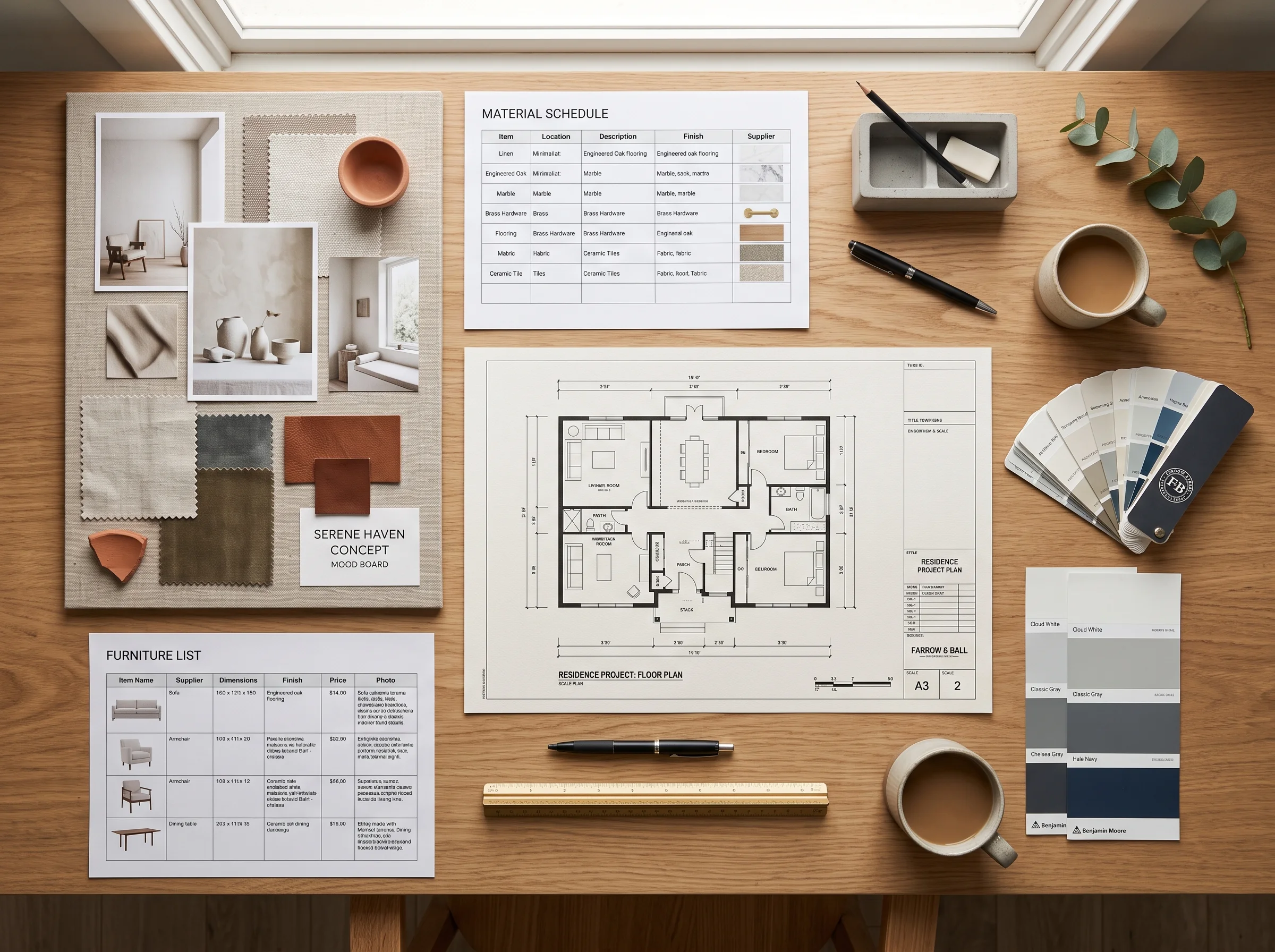
2. Concept presentation. The designer translates the brief into a direction: mood boards, an overall style, and a color palette. This is where you first see where the project is heading, and where you and the designer align on aesthetic before committing to specifics. It's also, historically, the stage that takes the longest, because the visualization is usually outsourced to a rendering studio.
3. Space plan. The functional layer. Furniture layout, traffic flow, how the room actually works in use. A good space plan is why a professionally designed room feels effortless to move through — the circulation was solved on paper before anything was placed.
4. Design development. The details get specified. A material and finish schedule (every paint, tile, fabric, and hardware selection documented) and a lighting plan (ambient, task, and accent layers). This is the stage that separates a coherent room from a collection of nice things.
5. Procurement. Turning the plan into orders. Furniture and product specifications, purchase orders, and the management of what's being bought, from whom, at what price. Designers use trade relationships here to source items and pricing you couldn't get on your own.
6. Construction documents. If your project involves structural or built-in work, this stage produces the dimensioned drawings a contractor builds from. Not every project needs it — a furniture refresh doesn't — but anything touching walls, plumbing, or custom millwork does.
7. Contractor coordination and project management. The operational core of a renovation. Sequencing the trades, holding people to schedule, catching errors before they're permanent, absorbing the day-to-day chaos of a build. On complex projects this is where much of the designer's real value lives.
8. Installation and final styling. The payoff. Furniture delivered and placed, art hung, the final layer of styling — the objects, textiles, and details that make a room feel finished and lived-in rather than showroom-blank. This is the day the project becomes a home.
"Interior design sounds like one service, but a full project is eight distinct stages. Knowing them is how you tell a complete proposal from one full of gaps."
What's Commonly Missing From Contracts
The gaps between these stages are where projects go wrong and bills grow unexpectedly. Before you sign anything, get clarity on four things that contracts routinely leave vague.
How many revision rounds per deliverable. Two rounds of concept revisions? Three of the space plan? Unlimited until you're happy, or billed after a limit? This is the single most common source of surprise invoices, because everyone wants "just one more version" and someone has to pay for it.
What happens if a product goes out of stock. Lead times are long and inventory shifts. If the sofa you approved is discontinued between design and procurement, who sources the replacement, and is that re-selection billable? A good contract says so up front.
Who handles installation scheduling. Coordinating deliveries, installers, and access is real work. Confirm whether the designer manages it or hands you a pile of tracking numbers and wishes you luck.
What defines "project completion." This sounds pedantic until final payment is due. Is the project done when furniture is placed, or when the last accessory is styled and the punch list is cleared? Define the finish line before you start, so there's no dispute at the end.
The AI Substitute: Where the Math Has Changed
Here's the genuinely new development. Stage 2 — concept presentation — and parts of Stage 3 — space planning and layout exploration — can now be done with AI at near-zero cost. The visualization that used to require weeks and a rendering studio's fee, you can now generate yourself in thirty seconds on your actual room, in as many directions as you want.
This changes the business case for hiring a designer in a specific, honest way. It doesn't touch stages 4 through 8 — the material tactility, the procurement relationships, the construction documents, the contractor management, the physical installation. Those still require a professional, and for a real renovation they're the bulk of the value. But if your project is mostly concept and layout — a single-room refresh where you're choosing a style, a palette, and a furniture arrangement rather than moving walls — then AI can carry the stages that used to justify the largest, slowest, most expensive part of a designer's fee. You arrive at any later stage, or at a designer's door, with the concept work already done.
The smart read isn't "AI replaces the project." It's "AI handles the front two stages, so you pay a designer only for the back six — or skip them entirely if your project never needed them."
The Takeaway
A full interior design project is eight stages, from discovery to final styling, and a good proposal accounts for all the ones your project actually needs. Read it against this list, close the gaps around revisions, stock-outs, scheduling, and completion, and you'll know exactly what you're paying for. Then apply the new reality: the concept and layout stages that once anchored a designer's fee are now within reach of any homeowner with a photo and thirty seconds. Handle those yourself, and hire a professional for the physical stages that genuinely require one — or discover that your single-room project didn't need the full eight after all.